
Container & Equipment
Compactors
For sites producing large volumes of waste, a compactor cuts that volume down before it's collected — around a 3:1 reduction — so fewer vehicles are needed.
- Around a 3:1 volume reduction
- For high-volume sites
- Pairs with air systems and wheelie bins
 Rent or Lease
What's included
Cutting volume before collection
Compactor machines are used at sites producing large volumes of waste, where cutting that volume down before collection matters most. Most compactors achieve around a 3:1 reduction ratio, which means fewer collection vehicles and lower transport cost.
Where a compactor makes sense
High-volume sites — distribution centres, manufacturing plants, large retailers and factories — where waste would otherwise fill several open-top containers or need daily collections.
Around a 3:1 reduction
Most compactors achieve around a 3:1 reduction ratio. Compacted waste means fewer collections, so the machine usually pays back through lower transport cost.
Paired with a compaction container
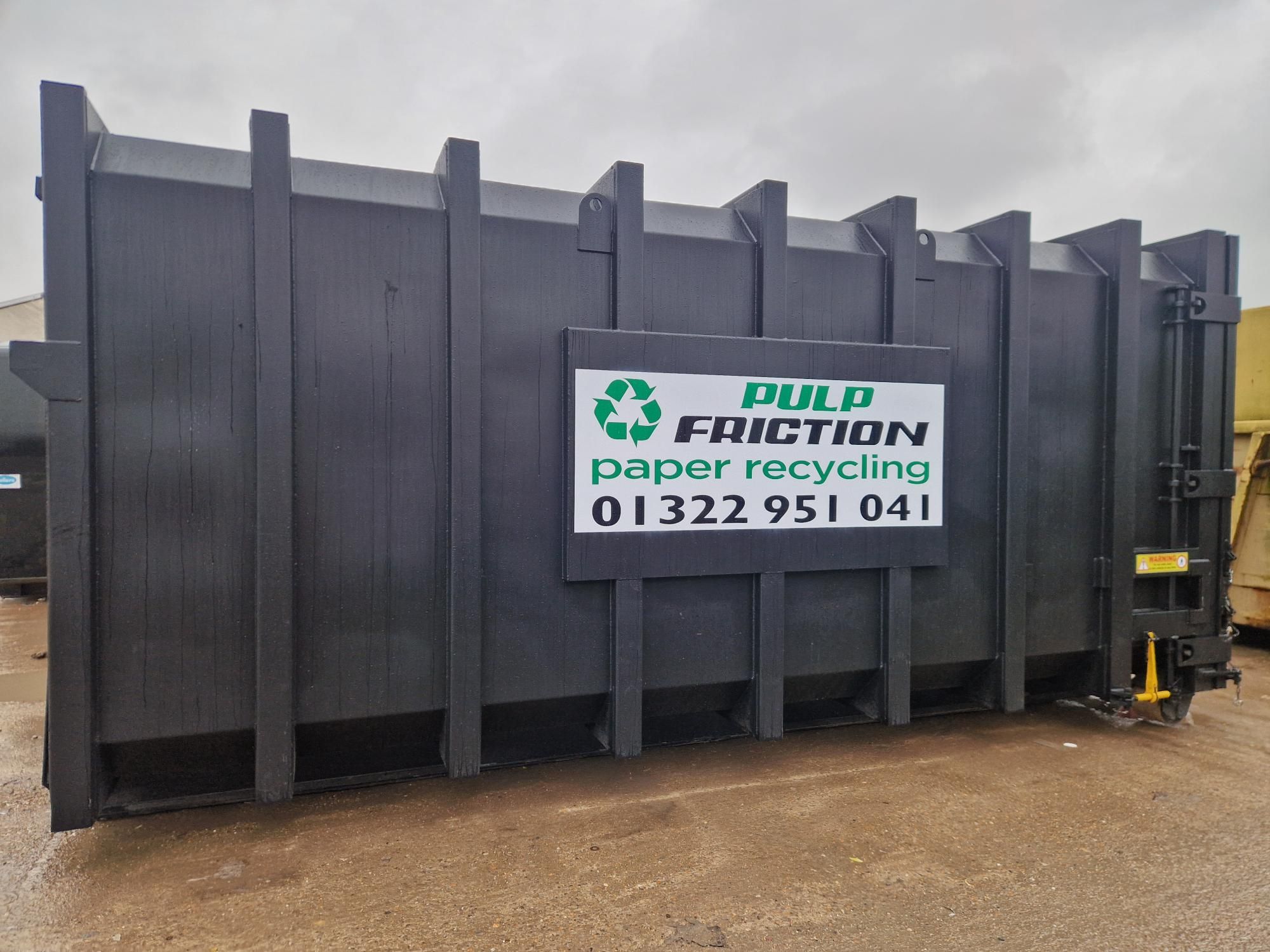
A compactor works with a 35 or 40 cubic yard compaction container: the machine compresses waste into the container, which is swapped when full.
Fed by an air extraction system
Compactors are commonly paired with air transfer systems that move lightweight paper offcuts, trims and shredded waste straight from inside the building to the machine outside.
Or fed by wheelie bins
Where the machine is fitted with a tipping device, wheelie bins can be lifted and emptied straight into the compactor.
Buy, rent or lease
A compactor can be bought, rented or leased. Tell us your waste volume and site layout and we'll help you work out which makes sense.
How it works
From enquiry to installed compactor
Tell us your volumes
How much waste you produce, what type, and how much space the site has outside.
We recommend a setup
The right compactor and compaction container size, and whether to feed it with an air system or wheelie bins — with a quote the same working day.
Delivery and install
The machine is installed and connected, and the compaction container positioned alongside.
Collections begin
The full container is swapped on a schedule or on call-off as part of your Pulp Friction collections.
What to expect
We aim to reply to equipment enquiries the same working day. A compactor is worth considering once a site is producing enough waste to fill open-top containers faster than a normal collection schedule can clear them — the reduction in vehicle movements is where it pays back. It's supplied as part of a Pulp Friction collection contract, and can be bought, rented or leased. Compactors are for dry, non-hazardous waste — never hazardous or liquid waste.
FAQ
Common questions
How much space do I need?
A compactor and its container sit outside, typically at a loading dock or in a yard, and need clear access for a hook-lift truck to swap the container. Tell us your site layout and we'll confirm whether it will work before anything is ordered.
What can go in a compactor?
Dry, non-hazardous waste — general refuse, cardboard, paper and packaging. Never hazardous or liquid waste.
Do I have to buy the machine?
No. Compactors can be bought, rented or leased. Which works best usually comes down to how long you expect to need it and how you'd prefer to spread the cost.
Does it work with my recycling as well as general waste?
Yes. A compactor is just as useful for loose cardboard or mixed paper as it is for general refuse — the compacted material still goes for recycling.