
Services
Plastic Recycling
Film and rigid plastics both have a place in our recycling stream, provided the material is clean.
- Clean film and rigid plastics
- Film collected baled, any bale size
- Baler advice through our partners
 Licensed Waste Carrier
What's included
What we collect, and how
Plastic only works as a recycling stream when the material is clean and sorted, so the first conversation is always about what you're producing and how clean it is. Tell us the type of plastic, whether it's film or rigid, roughly how much, and how it's stored.
Plastic film
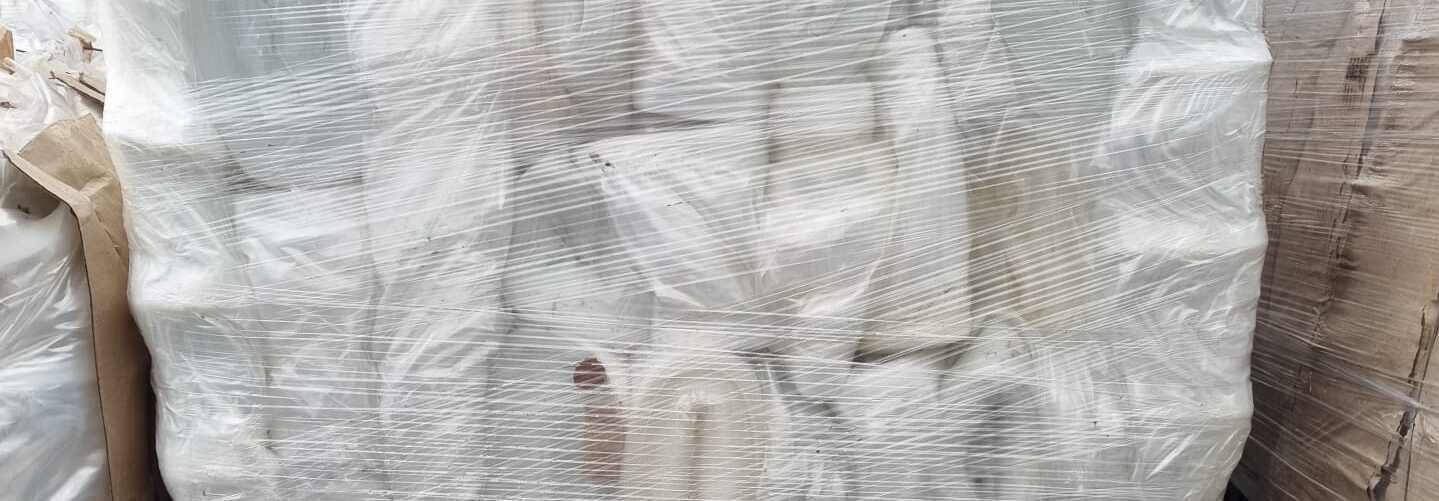
Pallet wrap, shrink hoods, polythene and PP sacks (bulk builders' sacks). We take all grades of clean, washed film. Film takes up an enormous amount of space loose, so we can only collect it baled — any bale size is acceptable.
Rigid plastics
Clean wheelie bins, UPVC window frames, drainage pipe, guttering, garden centre pots, tubs and trays (PTT) and Core-ex. Collected in stillages, dolavs or open-top containers depending on volume.
Keep grades apart
Different rigid grades are best kept apart where you can — mixed loads are harder to place and worth less.
Baler advice
If you generate film in any quantity and don't already bale it, that's the first thing to fix. We can advise on buying, renting or leasing a baling press through one of our trusted partners.
What happens to it
Everything comes back to our Erith depot, is checked for contamination and grade, and goes on to reprocessors.
An honest assessment
We'll tell you honestly whether what you're producing has value as a recyclate or is better handled through general waste.
Who it's for
Who this suits
Plastic recycling tends to make sense for:
- Distribution centres and large retailers — pallet wrap and shrink film in volume
- Packaging manufacturers and printers — film offcuts and production waste
- Garden centres — pots, tubs, trays and PP sacks
- Window and construction fabricators — UPVC frames, pipe and guttering
- Manufacturing and engineering sites — clean process film and rigid mouldings
Film and rigid plastics both have a place in our recycling stream, provided the material is clean.
How it works
From first call to reprocessing
Tell us what you produce
The type of plastic, film or rigid, roughly how much, and how clean it is.
Get a price
We confirm containers, baling and a collection pattern, and send a quote — we aim to reply the same working day.
We collect
Baled film in any bale size; rigid plastics in stillages, dolavs or open-top containers.
Checked and reprocessed
Material is checked for contamination and grade at our Erith depot and goes on to reprocessors.
What to expect
We aim to reply to quote requests the same working day. Clean, dry, single-grade film earns the best rebate; wet, dirty or heavily printed film and mixed rigid loads are worth less and may attract a charge. We'll tell you honestly whether what you're producing has value as a recyclate or is better handled through general waste. Collections run under our Waste Carrier Licence with full transfer paperwork.
FAQ
Common questions
What if I only produce a small volume?
For film, the limiting factor isn't volume, it's baling — as long as it's baled, any bale size is acceptable and we can add you to a local round. Small quantities of rigid plastic can go into a shared stillage or be brought to Erith direct.
How clean does the plastic need to be?
Free of food, liquid, tape, labels and other plastics as far as is practical, and dry — wet film goes mouldy in the bale and loses value. If in doubt, send us a photo or a sample and we'll tell you where it stands.
Why can't you collect loose film?
A trailer of loose film weighs almost nothing and costs the same to move as a full load — the numbers never work. Baling is what makes film recycling viable.
What can't you take?
No hazardous or liquid waste under any circumstances. We also don't take polystyrene, expanded foam, laminated or metallised film, or rigid plastics outside the grades listed above — if you're not sure, ask.